
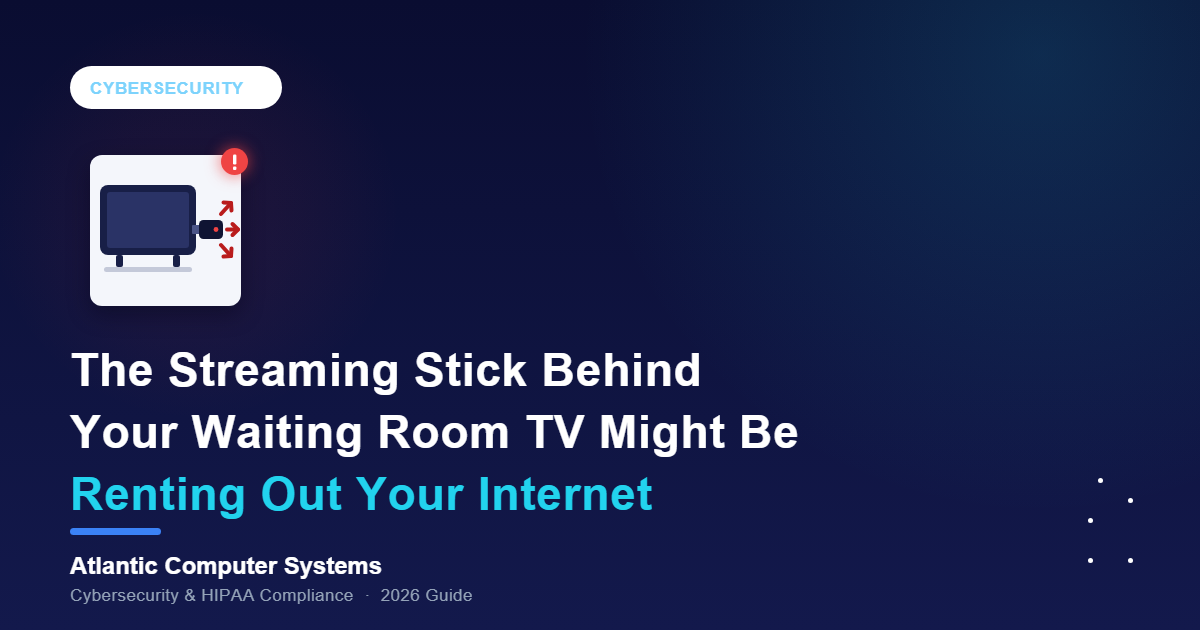
Someone bought a cheap Android streaming box for the waiting-room TV. It joined the office Wi-Fi, and nobody has thought about it since. If it’s part of the BADBOX 2.0 botnet, it may have arrived already infected.
An infected box can let criminals sell access to your practice’s internet connection, so their traffic leaves from your IP address. If it shares a network with the front-desk PCs, it can also be a way in.
What’s actually happening in 2026
BADBOX 2.0 is a botnet of millions of infected devices, such as Android-based TV streaming boxes, projectors and digital picture frames, that the FBI says were compromised before purchase or through backdoored apps during setup. Criminals sell or give away access to these devices as residential proxies, so their traffic appears to come from the owner’s internet connection.
A residential proxy relays someone else’s internet traffic through a home or small-business connection, so it looks like it starts there.
Announcing a July 2025 lawsuit against the botnet’s operators, Google said BADBOX 2.0 had compromised over 10 million uncertified Android devices and fueled large-scale ad fraud. In a March 2026 alert on residential proxies, the FBI listed what criminals route through them, including logins with stolen credentials that avoid location-based alerts. It warns that “the device’s IP address can be used by threat actors to mask their online illegal activity.” Here, that’s your practice’s address.
The FBI’s June 2025 BADBOX alert lists warning signs, including apps from suspicious marketplaces, setup steps that require turning off Google Play Protect, generic boxes advertised as “unlocked” or offering free content, unrecognizable brands, and unexplained internet traffic. It cautions that an indicator alone doesn’t confirm criminal activity.
Why this is a HIPAA problem, not just an IT problem
A TV box holds no patient records, but the PCs on the same network do. HIPAA requires an accurate and thorough assessment of the risks to the electronic patient information you hold, and security measures that reduce them to a reasonable and appropriate level (45 CFR 164.308(a)(1)(ii)(A) and (B)). An unvetted device beside your EHR workstations belongs in that assessment.
A proxy device can also be a path inward. KrebsOnSecurity reported in January 2026 that a new botnet, Kimwolf, relayed commands through residential proxy devices to scan the local networks behind them; most systems it compromised that way were unofficial Android TV streaming boxes.
The FBI’s March 2026 alert tells businesses to keep unauthorized devices off the network and to segment it, isolating sensitive data and systems from general traffic. A January 2025 OCR proposal would make network segmentation an explicit Security Rule requirement, but it’s still only proposed: GovInfoSecurity reported on July 8, 2026 that final action isn’t planned before July 2027.
What to actually do about it
Start with what’s plugged in, then keep anything you can’t vouch for away from patient data.
- Inventory every non-PC device, TVs included: streaming boxes, projectors and picture frames are on the FBI’s list, so record each one and its network in your HIPAA risk assessment.
- Buy Play Protect certified devices from brands you recognize: Google warns that uncertified devices “may not be secure” and may not get Android system updates.
- Put TVs and guest devices on their own network: separation keeps a compromised box away from clinical PCs and fixes two common small-office Wi-Fi mistakes.
- Never sideload apps or switch off Play Protect: the FBI says sideloading unofficial apps onto streaming sticks or Android TV boxes raises the chance of installing malware.
- Watch outbound traffic and unplug what you can’t explain: unexplained traffic is an FBI warning sign, and malware can survive a factory reset, so replace a suspect box instead.
Where ACS fits in
Our free 30-minute cybersecurity assessment reviews what shares your network with clinical PCs, TVs and guest devices included, and whether they’re walled off. If nobody watches your network month to month, that’s what managed IT services for medical practices covers.