
Cloud Technology · Healthcare IT
Why Medical Practices Are Switching to Cloud VoIP in 2026
Legacy phone lines are being phased out across the country. Here’s what healthcare providers need to know about HIPAA-compliant VoIP — and why the window to act is narrowing.
Atlantic Computer Systems·June 2026·8 min read

40–60%average cost reduction vs. legacy landlines2029AT&T copper line decommission deadline8–14 motypical ROI window for VoIP migration
The POTS Sunset Is Already Here
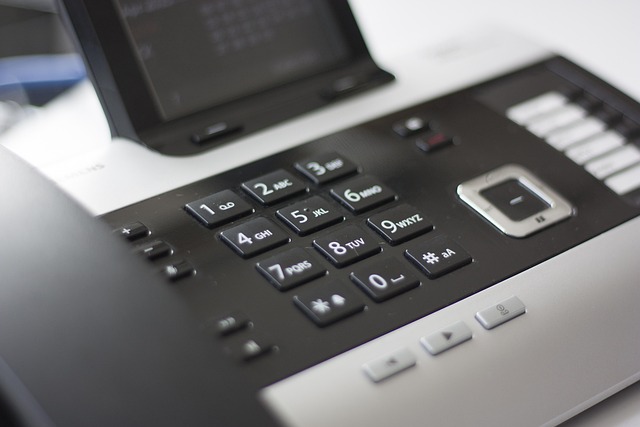
If your medical practice still relies on traditional copper landlines — known as POTS (Plain Old Telephone Service) — you’re operating on borrowed time. AT&T has been decommissioning copper infrastructure since October 2025, with a hard deadline of 2029. In roughly 20 states, carriers are no longer installing new copper lines at all.
This isn’t a distant regulatory concern. Practices that delay migration risk service disruptions with no graceful fallback. When copper goes dark in your area, the carrier’s obligation ends — and if you haven’t transitioned, your phones go with it.
Cloud VoIP (Voice over Internet Protocol) routes calls over your existing broadband connection. There’s no separate phone infrastructure to maintain, no copper to corrode, and no vendor holding you hostage to aging hardware. The same internet connection powering your EHR and billing software handles your phone system — with better reliability than most legacy lines.
Real Cost Savings for Your Practice
The financial case for cloud VoIP is straightforward. Legacy PBX systems require upfront hardware investment, ongoing maintenance contracts, and per-line fees that add up fast. Cloud VoIP eliminates all of that in favor of a predictable monthly per-extension cost — typically $20–$35 per user.
For a medical practice with 10 staff members, that translates to $200–$350/month compared to $600–$1,200/month for a comparable traditional system once hardware leases, maintenance, and per-minute charges are factored in. Most practices recover the cost of migration within 8 to 14 months.
Beyond the line-item savings, cloud VoIP unlocks capabilities that traditional systems simply can’t match at any price: automated appointment reminders (which reduce no-shows by up to 30%), intelligent call routing to keep hold times down, and unified communications that connect front desk, clinical staff, and remote workers on a single system.

HIPAA Compliance Requirements for VoIP
Healthcare is not like other industries when it comes to phone systems. Any VoIP platform that transmits or stores Protected Health Information (PHI) — including voicemails, recorded calls, or messages — is a Business Associate under HIPAA. That means your provider must sign a Business Associate Agreement (BAA) before you go live.
A signed BAA alone isn’t enough. The platform itself must meet HIPAA’s Technical Safeguard requirements:
End-to-End Encryption
All voice, voicemail, and messaging data must be encrypted in transit and at rest. Standard consumer VoIP services (including many widely-advertised options) do not meet this requirement. Look for TLS/SRTP encryption on voice streams and AES-256 on stored voicemails.
Access Controls and Authentication
Each user must have a unique login. Multi-factor authentication is strongly recommended and increasingly required by cyber liability insurers. Role-based access controls should limit which staff can access call recordings or patient voicemails.
Audit Logging
Your VoIP system must maintain tamper-proof logs of who accessed PHI, when, and from where. These logs are not optional — they’re required for breach investigation and OCR audits. Penalties for non-compliant systems range from $145 to $2.19 million per violation category.

Features Built for Healthcare Workflows
The right cloud VoIP system does more than replace your phone lines — it improves how your practice operates day to day. Here are the features that matter most for medical environments:
Automated Appointment Reminders
Outbound call and SMS reminders sent 24–48 hours before appointments have been shown to reduce no-shows by 25–30%. For a practice with 50 appointments per week and a 15% no-show rate, that’s meaningful recovered revenue — often $3,000–$8,000 per month depending on your fee schedule.
Hunt Groups and Smart Routing
Route calls by department, time of day, or urgency. Urgent calls reach clinical staff directly while billing inquiries queue separately — without requiring patients to navigate a maze of extensions.
Voicemail-to-Email Transcription
Voicemails arrive as text transcripts in your inbox, so staff can triage messages without playing each one. Note: when voicemails contain PHI, your provider’s BAA must explicitly cover transcription services.
Remote and Mobile Support
Clinicians taking after-hours calls, telehealth providers, and remote billing staff all work from the same phone system. Calls from a mobile app display your practice’s caller ID — patients see a familiar number, and providers keep their personal numbers private.
EHR and Practice Management Integration
Leading VoIP platforms integrate with major EHR systems to surface patient records when calls come in. Inbound calls can trigger automatic call-backs to the patient’s record, streamlining documentation and reducing double-entry.
How Migration Works
A properly managed VoIP migration causes zero downtime and takes 2–4 weeks from kickoff to go-live. Here’s how ACS structures the process for medical practices:
Network Readiness Assessment
We evaluate your existing internet connection, router, and LAN to confirm they can support voice traffic. If upgrades are needed — such as QoS configuration or a bandwidth increase — we handle that first so call quality is guaranteed from day one.
Number Porting
Your existing phone numbers transfer to the new system. This process takes 7–14 business days and runs concurrently with setup, so your lines never go dark. We manage all coordination with your current carrier.
System Configuration
We set up your auto-attendant, hunt groups, extensions, voicemail, and any integrations with your EHR or scheduling software. HIPAA compliance settings — encryption, access controls, audit logging — are configured and documented before go-live.
Staff Training
Your front desk, clinical, and administrative staff receive hands-on training for their specific roles. Most users are fully comfortable within one session. We provide reference guides for common tasks and a direct support line for the first 30 days.
Ongoing Support and Monitoring
After go-live, ACS monitors your phone system as part of your managed services agreement. System updates, security patches, and capacity adjustments happen automatically — you focus on patients, we handle the technology.
ACS CloudVoice: Purpose-Built for Growing Practices
Atlantic Computer Systems’ CloudVoice solution is designed specifically for small and mid-size businesses — including medical practices — that need enterprise-grade reliability without enterprise-grade complexity or cost.
CloudVoice is delivered as a fully managed service. That means ACS handles provisioning, configuration, updates, and support. You’re not buying software to manage — you’re buying a phone system that works.
What’s Included
Every CloudVoice deployment includes HD voice quality, unlimited local and long-distance calling, a mobile app for remote staff, voicemail-to-email, auto-attendant, call recording, and real-time analytics. HIPAA-conscious configuration and BAA documentation are available for healthcare clients.
Pricing That Scales With You
CloudVoice starts at $20 per extension per month — a fraction of what most practices pay for legacy systems. Add or remove extensions as your team grows, with no hardware to purchase or lease. There are no hidden fees for features, support, or number porting.
Backed by Local IT Expertise
Because ACS also manages your network, cybersecurity, and endpoints, CloudVoice integrates seamlessly with your broader IT environment. When something needs attention, one call reaches the team that knows your entire infrastructure — not a phone vendor who only sees the dial tone.
Frequently Asked Questions
Will my existing phone numbers transfer to a cloud VoIP system?
Yes. Number porting transfers your existing numbers — including main lines, direct extensions, and fax numbers — to the new system. The process typically takes 7–14 business days. During that window, both your old and new systems operate simultaneously, so there’s no interruption to incoming calls.
Is cloud VoIP reliable enough for a medical practice?
Leading cloud VoIP platforms maintain 99.99% uptime SLAs — better than most legacy phone infrastructures. Because calls route over the internet, reliability depends on your connection quality. ACS’s network assessment ensures your bandwidth and QoS settings support voice traffic before migration. We also configure failover routing to mobile numbers so calls are never dropped during a brief internet outage.
What makes a VoIP system HIPAA-compliant?
HIPAA compliance requires four things from a VoIP provider: (1) a signed Business Associate Agreement covering all PHI the platform touches, (2) end-to-end encryption for voice and stored voicemails, (3) role-based access controls with unique user credentials, and (4) tamper-proof audit logs. Not all VoIP providers meet these standards — it’s critical to verify before you sign up, not after.
What happens to our phones when the internet goes down?
ACS configures failover routing as part of every CloudVoice deployment. If your internet connection experiences an outage, incoming calls automatically forward to designated mobile numbers or a backup number of your choice. Staff can continue making outbound calls from the mobile app over cellular data. For practices that need maximum redundancy, we can also configure a secondary internet connection.
How long does a VoIP migration take from start to finish?
Most medical practice migrations are complete within 2–4 weeks. The timeline depends on the complexity of your existing setup, the number of extensions, and how quickly your current carrier processes the number port. ACS manages the entire process — you receive weekly status updates and a confirmed go-live date before we begin.
Ready to Upgrade?
Get a Free VoIP Assessment for Your Practice
ACS will evaluate your current phone setup, model your potential savings, and outline a migration plan with zero downtime — at no cost. Most practices are pleasantly surprised by how straightforward the switch is.