
Medspa Software in 2026: EMR vs Practice Management vs All-in-One — A Plain-English Guide for Practice Owners

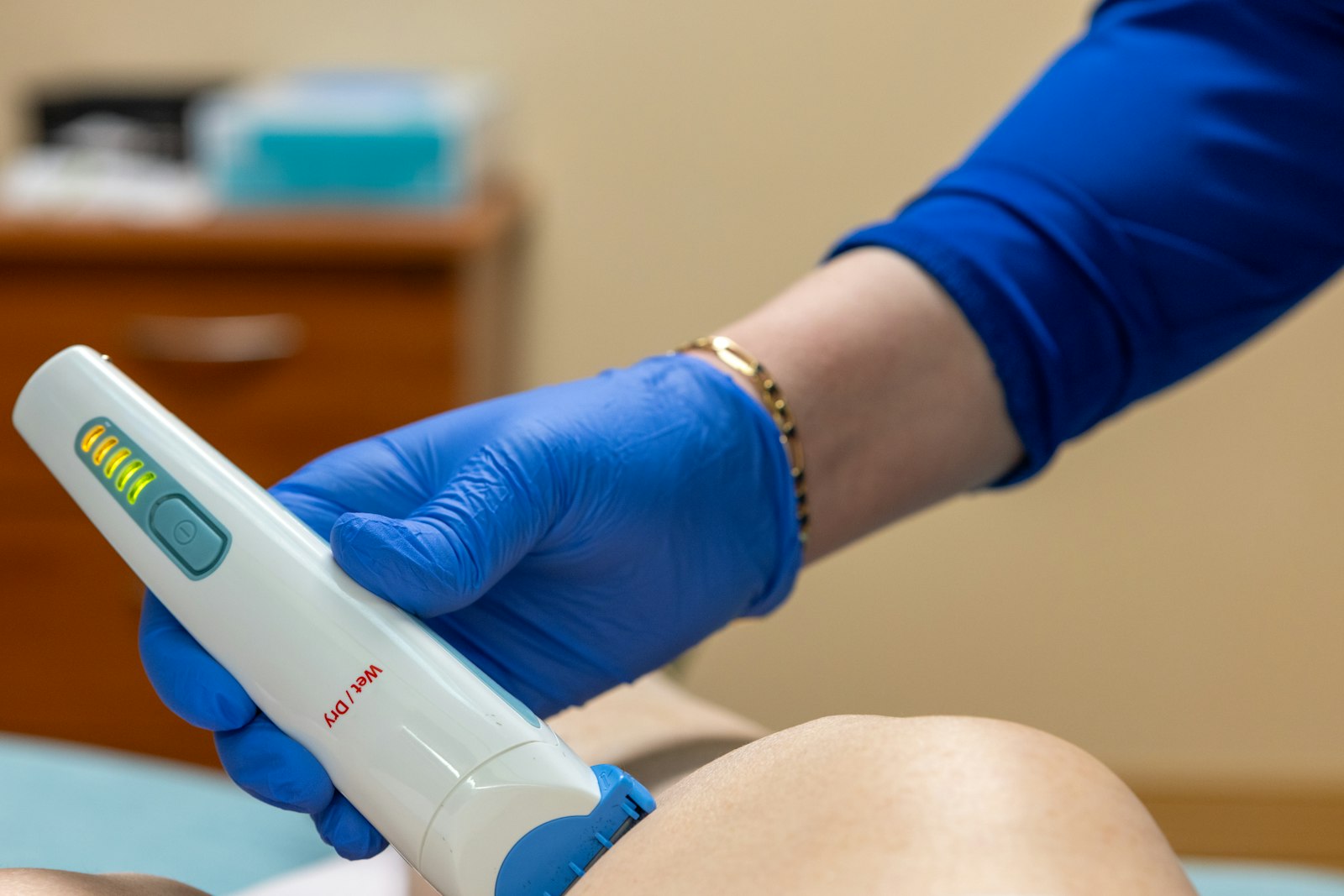
Medical professional using laser device at a medspa clinic
2026 Software Guide

Your plain-English breakdown of EMR, practice management, and all-in-one platforms — what each actually does, what it costs you not to have the right one, and how to choose.

📅 June 17, 2026 ⏱ 7 min read 👤 Atlantic Computer Systems

Walk into most medspas and you'll find some version of the same story: a booking app on one iPad, patient photos in a personal iCloud account, treatment notes in a Word doc or paper chart, and billing handled in yet another system that nobody fully understands. It works — until it doesn't.

In 2026, the medspa software market has fractured into three distinct categories, each solving a different slice of the problem. The confusion isn't that there are too many options — it's that the industry uses the terms EMR, practice management software, and all-in-one platform interchangeably, when they are fundamentally different products with different price points and different risk profiles.

This guide sorts out the difference, explains what each category actually does, and gives you a framework for deciding which combination your practice needs.

$0B Global medspa market projected value by 2030 Source: Grand View Research, Medical Spa Market Report 2025

That growth trajectory is exactly why software vendors are flooding the space — and why medspa owners are drowning in pitches. The right stack depends on your size, your clinical scope, and whether you're running a single room or a multi-location group.

The Three Software Categories Every Medspa Owner Should Know

Before comparing products, you need a clear mental model. Here's the simplest way to think about it:

EMR (Electronic Medical Record) software is about the clinical encounter. It captures the patient's medical history, treatment notes, before-and-after photos, consent forms, contraindication screening, and prescriber documentation. It's the digital equivalent of a paper chart — but with audit trails, e-signature, and (in better systems) built-in HIPAA compliance tools.

Practice management software handles the business layer: scheduling, patient intake, billing, insurance (if applicable), reporting, and staff management. It doesn't know or care what happened in the treatment room — it tracks that a service occurred, how long it took, and how the patient paid.

All-in-one platforms attempt to do both. The best of them do it well enough for most medspas. The worst give you a thin EMR bolted onto a scheduling app, leaving clinical gaps that create real liability.

💡 Key distinction: EMR = clinical record. Practice management = business operations. All-in-one = both, at varying depth. The wrong choice isn't just inconvenient — it can mean incomplete patient records, HIPAA exposure, or a billing system that doesn't match your actual workflow.
Medical professional reviewing electronic health records on a tablet in a modern clinic
Photo: National Cancer Institute on Unsplash (free for commercial use)

EMR Software: What It Does and When You Need It

A true EMR is purpose-built for clinical documentation. In a medspa context, that means it needs to handle the specific workflows of aesthetic medicine, not just generic healthcare: neurotoxin and filler dosing, laser parameters, body contouring settings, skincare protocol tracking, and pre/post-treatment photo management.

The core capabilities of a medspa-specific EMR include:

  • Digital intake and consent forms with e-signature and timestamped audit trails
  • Treatment charting with anatomical diagrams (face mapping, injection site notation)
  • Before-and-after photo storage tied to the patient record — not floating in a photo app
  • Contraindication screening and medication/allergy documentation
  • Prescriber documentation if your state requires physician oversight for certain treatments
  • HIPAA-compliant cloud storage with a signed Business Associate Agreement (BAA) from the vendor
0% of medspa malpractice claims involve incomplete or missing treatment documentation Source: ASPS Medical Liability Survey, 2024

That number is the reason dedicated EMR software exists. A paper chart or a Word document doesn't timestamp your entries, doesn't prevent edits without an audit trail, and doesn't survive a ransomware attack. When a patient comes back six months later and says their last provider used X units and it wore off early, your chart is your defense.

When you need a standalone EMR: If you have a medical director or on-staff NP/PA running a high volume of injectable or laser treatments, or if you're scaling to multiple locations and need centralized patient records, a dedicated EMR pays for itself in liability reduction alone. Leading medspa-specific options in 2026 include Aesthetic Record, PatientNow, and ChartLogic Aesthetics — each with different strengths in charting depth versus photo management.

Practice Management Software: The Operational Backbone

Business analytics dashboard on laptop showing appointment scheduling and revenue metrics for a medical practice
Photo: Luke Chesser on Unsplash (free for commercial use)

Practice management software is where the business of running a medspa actually happens. It's the system your front desk lives in, your office manager reports from, and your providers check before walking into a room.

The core features you should expect from any modern medspa practice management platform:

  • Online booking and appointment scheduling with automated confirmations and reminders (SMS + email)
  • Patient intake automation — digital forms sent before arrival so check-in takes 90 seconds
  • Point-of-sale and payment processing with package and membership management
  • Staff scheduling and payroll integration
  • Marketing automation — loyalty programs, birthday offers, reactivation sequences
  • Reporting and analytics — revenue per provider, booking conversion, retention rates, treatment popularity
  • Inventory management for retail and treatment supplies
💡 Revenue insight: Practices using automated rebooking reminders see an average 22% increase in rebooking rates versus phone-only follow-up. If your practice management software doesn't do this automatically, you're leaving recurring revenue on the table every single day.

The most widely used dedicated practice management platforms for medspas in 2026 are Vagaro, Mindbody, Boulevard, and Jane App. Boulevard in particular has gained ground with medspas for its intelligent scheduling (which optimizes for provider utilization, not just open slots) and its built-in card-on-file and membership billing. Mindbody remains dominant in the wellness crossover space — if you offer yoga, float tanks, or wellness coaching alongside aesthetics, its marketplace exposure alone can justify the higher price point.

All-in-One Platforms: Who They're Built For

Modern medical spa reception desk with tablet check-in system and welcoming interior design
Photo: Martha Dominguez de Gouveia on Unsplash (free for commercial use)

All-in-one platforms have become the dominant choice for new and growing medspas — and for good reason. Running two or three separate systems means double data entry, integration headaches, subscription costs stacking on top of each other, and staff training on multiple interfaces. An all-in-one collapses that complexity into a single login.

The leading all-in-one platforms purpose-built for medspas in 2026 are Zenoti, Pabau, Nextech Aesthetics, and Aesthetic Record (which has grown well beyond its EMR roots). Each handles clinical charting, scheduling, payments, and marketing under one roof — but their depth varies significantly in each area.

0 hrs/wk Average admin time saved per week when switching to a unified all-in-one platform Source: Zenoti State of the Medspa Industry Report 2025

Where all-in-one platforms shine: Single-location medspas doing $500K–$3M annually, practices without a dedicated biller or operations manager, and owners who want one vendor relationship and one bill. The 8+ hours per week of admin time savings is real — and at a practice where provider time bills at $200–$400/hour, that math is compelling.

Where all-in-one platforms fall short: High-volume injectables practices that need deep clinical charting (especially facial mapping and batch documentation across 30+ patients per day) often find all-in-one EMR modules too shallow. Multi-location groups above 5 locations tend to hit scalability ceilings and need enterprise-grade practice management tools that all-in-ones can't match.

⚠️ Watch out for: All-in-one platforms that check "EMR" as a feature but only provide a text note field and a photo upload. A real EMR includes anatomical charting templates, consent form workflows with audit trails, and a signed BAA from the vendor. If a vendor can't produce a signed BAA, their platform is not HIPAA-compliant — regardless of what their sales deck says.

How to Choose: A 5-Question Framework

There's no universally right answer — but these five questions will surface the right answer for your practice.

What is your clinical volume and complexity?

A solo NP doing 15 Botox appointments per day has different charting needs than a multi-provider practice running CO₂ lasers, body contouring, and hormone therapy. Higher volume and clinical complexity almost always points toward a dedicated or deeply capable EMR component — not an afterthought charting field.

How many systems are you currently managing?

If you're already on 3+ systems and spending hours reconciling data, an all-in-one consolidation play is probably worth the migration pain. If you have a single strong platform and only need to add one capability, a point solution plus integration may be less disruptive and less expensive.

What does your state's medical oversight model require?

Some states require physician co-signature or real-time oversight for certain procedures. If your compliance model involves documentation that needs to route to a remote medical director for approval, your EMR or charting system needs to support that workflow explicitly — not via a workaround.

Do you (or will you) take insurance?

Most medspas don't, but if you offer any medically billed services (certain laser treatments, PRP under a physician's NPI, or hyperhidrosis treatment billed to insurance), you need a practice management platform with claim scrubbing and ERA/EOB processing. Most medspa-specific all-in-ones don't have this — you'd need a hybrid approach or a platform like Nextech that was built with the medical billing layer intact.

What is your 3-year growth plan?

The worst outcome is migrating all your patient data 18 months after implementation because you outgrew the platform. If you're planning to add locations, franchise, or sell the business, choose a platform that has a clear enterprise tier and a reputation for multi-location support. Zenoti and Nextech are the two names that consistently appear in practices with 5+ locations. Pabau is strong for European-expansion plays. Boulevard is the current leader for premium US single-location and small multi-location aesthetics practices.

Healthcare provider reviewing software options on laptop in a bright medical office
Photo: National Cancer Institute on Unsplash (free for commercial use)

FAQ

Is an EMR required for a medspa to be HIPAA compliant?

Not specifically — HIPAA compliance is about how you protect and handle PHI, not which software you use. But any system that stores, transmits, or processes PHI (including booking systems with medical history fields, photo storage, and consent forms) must be covered by a signed BAA with the vendor. A proper EMR typically handles this; a generic scheduling app often does not. If you're storing patient photos or treatment notes in any cloud system, check whether you have a signed BAA — the absence of one is itself a HIPAA violation.

What's the difference between an EMR and an EHR?

In formal terms, an EMR (Electronic Medical Record) is a digital version of a single provider's paper chart — it stays within one practice. An EHR (Electronic Health Record) is designed to be shared across providers and healthcare systems. In practice, the terms are used interchangeably in the medspa space. When a medspa vendor says "EMR," they mean a system for managing clinical records within your practice — not one that integrates with a hospital network. For most medspas, the distinction is academic: you want a system that securely stores patient records and supports your clinical workflow.

Can I use generic software like Google Workspace for patient records?

Google Workspace does offer a BAA for Business and Enterprise tiers — so it's technically possible to store PHI in Google Drive with a BAA in place. But using a generic productivity suite as your "EMR" means you lose all the clinical workflow features (anatomical charting, consent templates, treatment-specific photo organization, audit trails) and have to build your own safeguards. In practice, using Google Docs or Sheets for patient records at any scale is a compliance and operational risk. It's the kind of setup that looks fine right up until an OCR audit or a patient complaint.

Hov much should medspa software cost?

Pricing varies widely. Practice management platforms like Vagaro and Jane App start around $30–$90/month for a single provider. All-in-one platforms like Boulevard and Pabau typically run $175–$400/month for a small medspa. Enterprise platforms like Zenoti and Nextech are custom-quoted, often $500–$2,000+/month depending on location count and feature set. Standalone EMRs like Aesthetic Record or PatientNow are typically $200–$500/month. The cost of underinvesting in software — lost bookings, billing errors, compliance exposure, and staff time — almost always exceeds the subscription cost of the right platform.

What should I look for in a medspa software demo?

Beyond the feature checklist, watch for three things: First, how does the system handle a missed appointment rescheduling flow — that's where booking software lives or dies. Second, can you actually chart a filler treatment with a face map in under 3 minutes? If the demo rep has to work to show you this, your providers will struggle daily. Third, ask to see the BAA and confirm it covers your specific use case. Any vendor who hedges on this in the demo is a vendor you should not trust with your patient data.

Not sure which software stack is right for your medspa?

Atlantic Computer Systems works with medspa practices across the Northeast to evaluate, implement, and secure the right technology stack — including HIPAA-compliant IT infrastructure that works alongside your software.

Sources & Further Reading

Grand View Research — Medical Spa Market Size & Forecast 2025 · Zenoti — State of the Medspa Industry Report 2025 · American Society of Plastic Surgeons — Medical Liability Survey 2024 · IBM — Cost of a Data Breach Report 2025 · HHS OCR — HIPAA Security Rule NPRM, December 2024

Related articles

Partner with Us for Comprehensive IT

We're happy to answer any questions you may have and help you determine which of our services best fit your needs.

Call us at: 1-650-300-7557

Your benefits:

Client-oriented approach
Proven results and reliability
Industry-leading technology
Transparent pricing, no surprises

What happens next?

1We schedule a call at your convenience
2We do a discovery and consulting meeting
3We prepare a proposal tailored to your needs

Schedule a Free Consultation

Fill out the form and we'll be in touch soon.