
The Phone Bill That Tells a Bigger Story
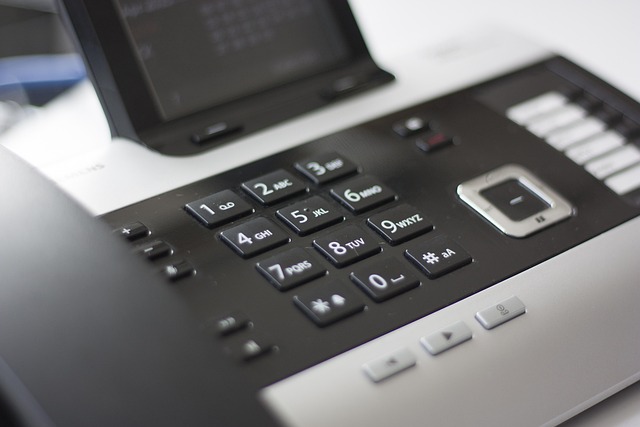
A property management company in Redwood City was paying $3,200 a month for its phone system. It had been paying roughly that amount — adjusted upward every year or two — for more than a decade. The system ran on copper lines, required a closet-sized PBX unit that hummed and blinked in the back office, and offered the basic features that business phones have offered since the 1990s: hold, transfer, voicemail, and a hunt group that rang the front desk first.
When the company migrated to a VoIP (Voice over Internet Protocol) system last year, their monthly phone cost dropped to $840. But the savings on the bill were only part of the story. The new system gave them features they didn’t know they were missing — auto-attendants that routed calls by department, voicemail-to-email transcription, call recording for dispute resolution, a mobile app that let agents take business calls from their personal phones without giving out personal numbers, and video conferencing built into the same platform.
The old phone system was a cost. The new one is a tool.
This is the shift that thousands of small and mid-sized businesses are navigating right now, and the financial math consistently points in one direction. At Atlantic Computer Systems, we’ve helped businesses across the Bay Area evaluate, implement, and manage VoIP phone systems. Here’s what the comparison actually looks like when you examine all the costs and capabilities.
Understanding What You’re Actually Paying For with Traditional Phone Service
Traditional phone systems — also called POTS (Plain Old Telephone Service) or landline systems — were the backbone of business communications for the better part of a century. They’re reliable, familiar, and in most offices, largely invisible. That invisibility is part of the problem: many business owners have no idea what they’re actually paying for.
A traditional business phone system has several cost layers. The line rental is the monthly charge for each physical phone line connecting your office to the telephone company’s central office. For a business with 15 employees who each need a phone line, this alone can run $30 to $50 per line per month, or $450 to $750 monthly before anyone makes a single call.
The PBX hardware — the Private Branch Exchange unit that sits in your office and routes calls internally — represents a significant capital expense. A new PBX system for a small business can cost $5,000 to $20,000, and older units require periodic maintenance, licensing renewals, and eventual replacement. Many businesses are running PBX hardware that’s well past its manufacturer’s end-of-life date, which means no security patches and no warranty support.
Long-distance and international charges still apply on traditional systems, though they’ve decreased over the years. For businesses with clients, vendors, or remote offices in other regions, these charges accumulate quietly.
Maintenance and support costs for traditional systems are often the most opaque. When a phone line goes down or the PBX unit needs service, you’re typically calling a specialized telephony technician who charges premium rates — and who may need to order parts for aging equipment that’s becoming harder to source.
Add it all up, and a 25-employee business running a traditional phone system commonly pays $2,500 to $4,500 per month in total telecommunications costs.
How VoIP Changes the Cost Structure
VoIP works by converting voice into digital packets and transmitting them over the internet — the same network your business already uses for email, web browsing, and cloud applications. This architectural difference eliminates several cost layers that traditional phone systems require.
There are no physical phone lines to rent. VoIP calls travel over your existing internet connection. For most businesses, the incremental bandwidth required for voice calls is minimal — a single VoIP call uses roughly 100 Kbps, which is a fraction of what a typical business internet connection provides.
There is no PBX hardware to buy or maintain. Cloud-hosted VoIP systems run the call routing logic on the provider’s servers. Your office needs only IP phones (or softphone apps on existing computers and smartphones) and a network connection. The capital expense of a PBX unit disappears entirely.
Long-distance is typically included. Most VoIP business plans include unlimited domestic calling, and international rates are dramatically lower than traditional carriers because the calls travel over the internet for most of their journey.
Maintenance is the provider’s responsibility. Software updates, security patches, and system upgrades happen on the provider’s infrastructure. Your IT team — or your managed IT provider — handles only the local network and endpoint devices.
For the same 25-employee business, a cloud VoIP system typically costs $20 to $35 per user per month, putting total monthly spend between $500 and $875. That’s a 60% to 80% reduction compared to traditional phone systems, with no upfront capital expenditure.
The Feature Gap: What Traditional Systems Simply Can’t Do
Cost savings alone make VoIP compelling, but the feature differential is what makes it transformative. Modern VoIP platforms include capabilities that traditional phone systems either can’t provide or require expensive add-on modules to approximate.
Unified communications integrates voice calls, video conferencing, team messaging, and file sharing into a single platform. Instead of paying separately for a phone system, a video conferencing service, and a team chat tool, everything runs through one application with one login and one monthly bill.
Mobile integration allows employees to make and receive business calls on their personal smartphones using the company’s phone number. This is particularly valuable for businesses with field staff, remote workers, or employees who travel. The business number rings on their desk phone and their mobile app simultaneously.
Auto-attendants and call routing that would cost thousands of dollars as add-on modules for a traditional PBX are standard features in VoIP platforms. Calls can be routed by department, time of day, caller ID, or custom rules — without any additional hardware.
Voicemail-to-email transcription converts voice messages to text and delivers them to your inbox, so you can triage voicemails without listening to each one. This is a standard feature on most VoIP platforms and a premium add-on (if available at all) on traditional systems.
Call analytics and reporting give business owners visibility into call volumes, wait times, peak hours, and individual performance metrics. For businesses that depend on phone-based sales or customer service, this data is invaluable for staffing and process improvement.
Integration with business software — CRM systems, helpdesk platforms, scheduling tools — allows VoIP systems to automatically log calls, pull up customer records when the phone rings, and trigger workflows based on call outcomes. Traditional phone systems exist in isolation from the rest of your technology stack.
Reliability and Call Quality: Addressing the Lingering Concern
The most common objection to VoIP is reliability. Business owners who remember early VoIP implementations — choppy audio, dropped calls, echo — are understandably cautious. But VoIP technology in 2026 is fundamentally different from what existed even five years ago.
Modern VoIP platforms run on geographically distributed cloud infrastructure with built-in redundancy. If a data center in one region experiences an issue, calls automatically route through another. Most enterprise VoIP providers offer 99.99% uptime guarantees — which translates to less than 53 minutes of downtime per year.
Call quality is determined primarily by your internet connection. A business with a modern broadband connection — 100 Mbps or higher, which is standard for most commercial internet plans — will experience call quality that is indistinguishable from traditional phone service. Quality of Service (QoS) settings on your network router can prioritize voice traffic to ensure calls remain clear even during periods of heavy data usage.
The one scenario where traditional phone lines retain an advantage is during extended power outages. Copper phone lines carry their own power, while VoIP requires electricity and internet connectivity. However, this vulnerability is easily addressed with a UPS (Uninterruptible Power Supply) for your network equipment and the automatic failover-to-mobile features that most VoIP platforms provide.
Making the Switch: What the Transition Looks Like
Migrating from a traditional phone system to VoIP is less disruptive than most businesses expect. The process typically takes two to four weeks from decision to go-live, and at ACS, we manage every step.
The transition begins with a network assessment to ensure your internet connection and internal network can support voice traffic. In most cases, the existing infrastructure is sufficient, though some offices may benefit from a network switch upgrade or a dedicated internet connection for voice.
Number porting transfers your existing phone numbers to the new VoIP platform, so clients and contacts continue reaching you at the same numbers. Porting typically takes 5 to 10 business days and happens seamlessly — there’s no gap in service.
Configuration and training includes setting up auto-attendants, call routing rules, voicemail greetings, and user accounts, followed by brief training sessions for your team. Most employees are comfortable with the new system within a day or two.
We also ensure that your VoIP system is secured and compliant. For healthcare practices, this means encrypted voice traffic that satisfies HIPAA requirements — see our HIPAA Compliance Guide. For government contractors, it means encryption standards that meet CMMC specifications — see our CMMC Compliance Guide.
See the Savings for Your Business
The financial case for VoIP is strong for virtually any business that currently runs a traditional phone system. The question isn’t whether you’ll save money — it’s how much, and what additional capabilities you’ll gain in the process.
Atlantic Computer Systems provides free VoIP assessments that include a side-by-side cost comparison based on your current phone bill, a feature comparison showing what you’ll gain, a network readiness evaluation, and a migration timeline. Schedule your assessment or call us at 1-650-300-7557.